この記事のゴール
バス停を探すところから、運賃を払って目的のバス停で降りるところまで、一人でできるようになります。
Tujuan artikel ini
Anda akan belajar mencari halte, membayar ongkos, dan turun di tujuan sehingga bisa naik bus sendiri.
Your goal
Learn how to find the stop, pay the fare, and get off at your destination so you can ride the bus by yourself.
Mục tiêu của bài viết
Bạn sẽ biết cách tìm trạm, trả tiền và xuống đúng điểm để có thể tự đi xe buýt.
この記事の対象:東京23区内の都営バスです。基本は「前乗り・前払い・後ろ降り」です。多摩地域や別の会社では乗り方が違うことがあります。
Cakupan: Bus Toei di 23 distrik Tokyo. Umumnya naik dari pintu depan, bayar saat naik, dan turun dari pintu belakang. Daerah Tama dan operator lain mungkin berbeda.
Scope: Toei buses in Tokyo’s 23 wards. Normally, board at the front, pay when boarding, and exit at the rear. Tama-area buses and other operators may differ.
Phạm vi: Xe buýt Toei trong 23 quận Tokyo. Thông thường lên cửa trước, trả tiền khi lên và xuống cửa sau. Khu Tama và hãng khác có thể khác.
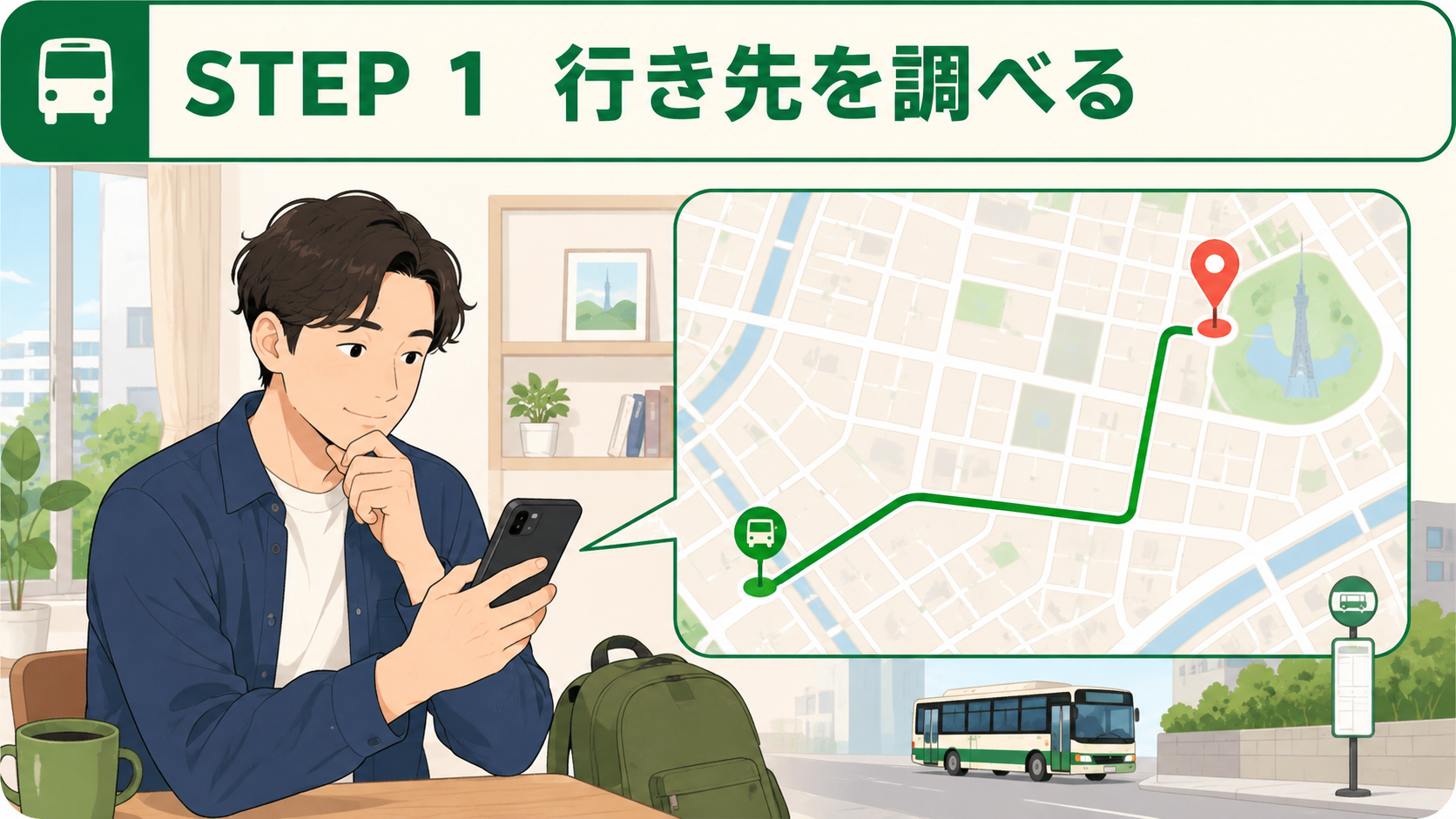
STEP 1|行き先を調べるLANGKAH 1|Cari rute ke tujuanSTEP 1|Plan your destinationBƯỚC 1|Tìm đường đến nơi cần đến
Ikisaki o shiraberu
今すること
- 地図アプリで、乗るバス停と降りるバス停を調べます。
- 系統番号・行き先・降りるバス停をメモします。
質問:このバスは新宿駅へ行きますか?
Kono basu wa Shinjuku-eki e ikimasu ka?
Kono basu wa Shinjuku-eki e ikimasu ka?
Yang dilakukan
- Gunakan aplikasi peta untuk mencari halte naik dan halte turun.
- Catat nomor rute, tujuan, dan nama halte turun.
Tanya: Apakah bus ini menuju Stasiun Shinjuku?
Kono basu wa Shinjuku-eki e ikimasu ka?
Kono basu wa Shinjuku-eki e ikimasu ka?
What to do
- Use a map app to find your boarding and destination stops.
- Save the route number, destination and stop name.
Ask: Does this bus go to Shinjuku Station?
Kono basu wa Shinjuku-eki e ikimasu ka?
Kono basu wa Shinjuku-eki e ikimasu ka?
Việc cần làm
- Dùng ứng dụng bản đồ để tìm trạm lên và trạm xuống.
- Ghi lại số tuyến, điểm đến và tên trạm xuống.
Hỏi: Xe này có đi đến ga Shinjuku không?
Kono basu wa Shinjuku-eki e ikimasu ka?
Kono basu wa Shinjuku-eki e ikimasu ka?
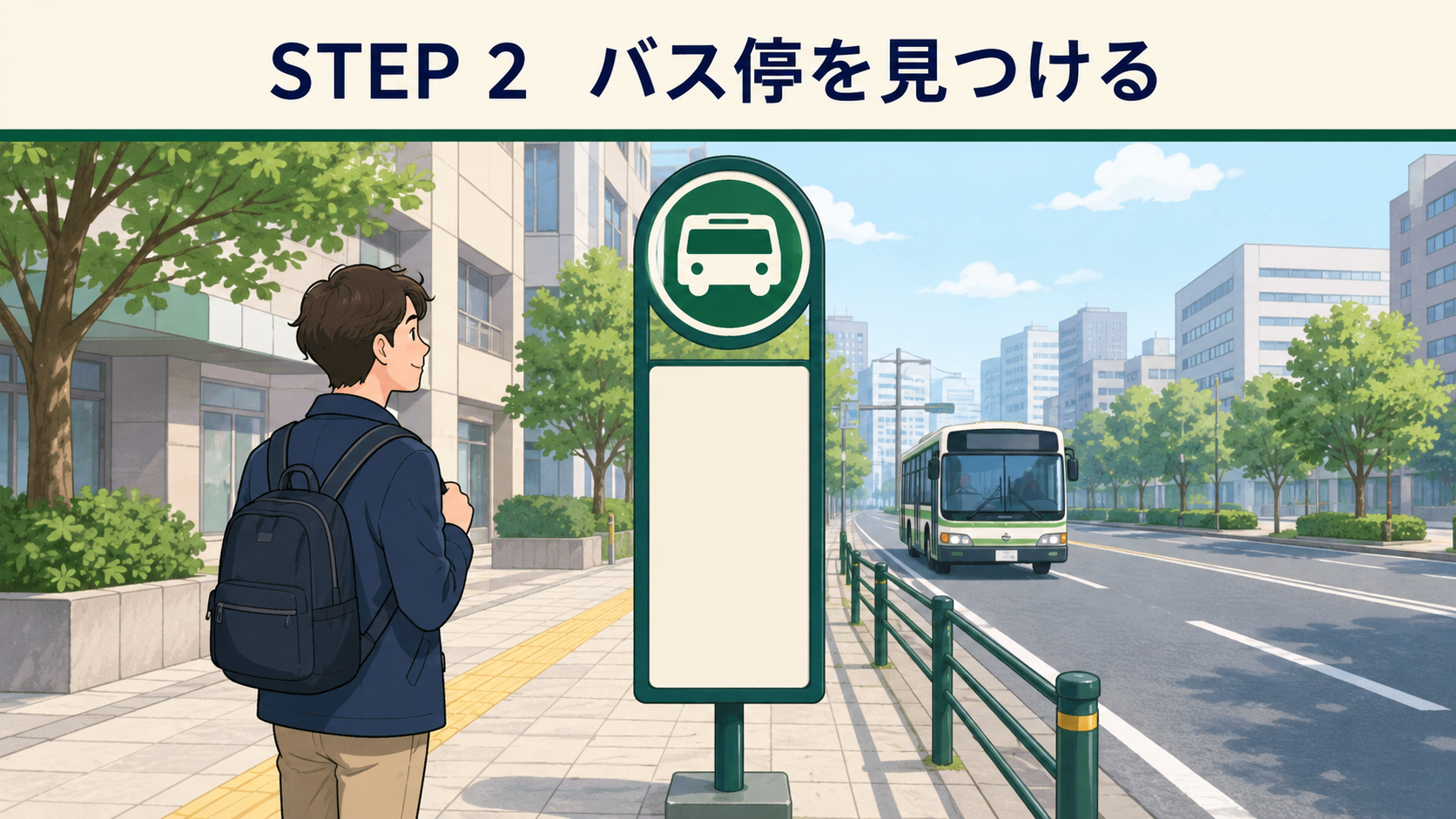
STEP 2|バス停を見つけるLANGKAH 2|Temukan halteSTEP 2|Find the bus stopBƯỚC 2|Tìm trạm xe buýt
Basutei o mitsukeru
見るもの
- 歩道にある、バスの絵が付いた停留所のポールを探します。
- 同じ駅前でも、行き先によって乗り場が違います。
✓ バス停の名前と乗り場番号を確認できた
Yang dilihat
- Cari tiang halte dengan gambar bus di trotoar.
- Di depan satu stasiun bisa ada beberapa tempat naik untuk tujuan berbeda.
✓ Nama halte dan nomor tempat naik sudah benar
What to look for
- Find the bus-stop pole with a bus symbol on the sidewalk.
- A station may have several boarding points for different destinations.
✓ I checked the stop name and boarding-point number
Điều cần nhìn
- Tìm cột trạm có biểu tượng xe buýt trên vỉa hè.
- Trước cùng một ga có thể có nhiều điểm lên cho các hướng khác nhau.
✓ Đã kiểm tra tên trạm và số điểm lên
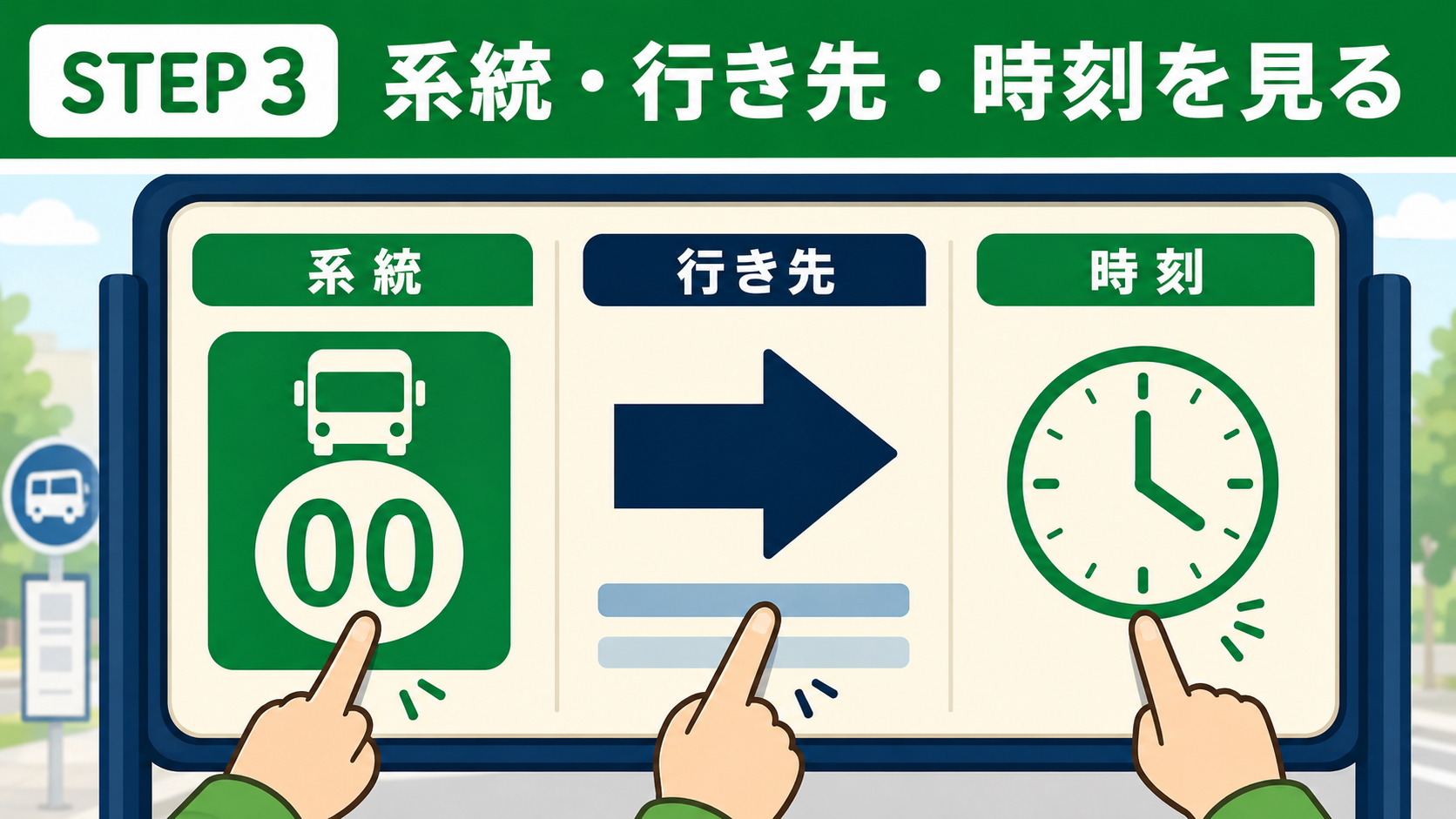
STEP 3|系統・行き先・時刻を見るLANGKAH 3|Cek nomor, tujuan, waktuSTEP 3|Check route, destination and timeBƯỚC 3|Kiểm tra tuyến, điểm đến, giờ
Keitō / ikisaki / jikoku
3つを照らし合わせる
- 系統:バスのルートを表す番号や文字
- 行き先:そのバスが最後に向かう場所
- 時刻:平日・土曜・休日の欄を間違えない
質問:〇〇行きのバス停はここですか?
○○-yuki no basutei wa koko desu ka?
○○-yuki no basutei wa koko desu ka?
Cocokkan 3 hal
- Nomor rute: kode rute bus
- Tujuan: arah atau tujuan akhir bus
- Waktu: pilih jadwal hari kerja, Sabtu, atau hari libur yang benar
Tanya: Apakah halte bus menuju ○○ di sini?
○○-yuki no basutei wa koko desu ka?
○○-yuki no basutei wa koko desu ka?
Match three items
- Route: the number or code for the bus route
- Destination: the direction or final destination
- Time: use the correct weekday, Saturday or holiday column
Ask: Is this the stop for the bus to ○○?
○○-yuki no basutei wa koko desu ka?
○○-yuki no basutei wa koko desu ka?
Đối chiếu 3 mục
- Tuyến: số hoặc mã tuyến xe
- Điểm đến: hướng hoặc bến cuối
- Giờ: chọn đúng cột ngày thường, thứ Bảy hoặc ngày lễ
Hỏi: Trạm xe đi ○○ có phải ở đây không?
○○-yuki no basutei wa koko desu ka?
○○-yuki no basutei wa koko desu ka?
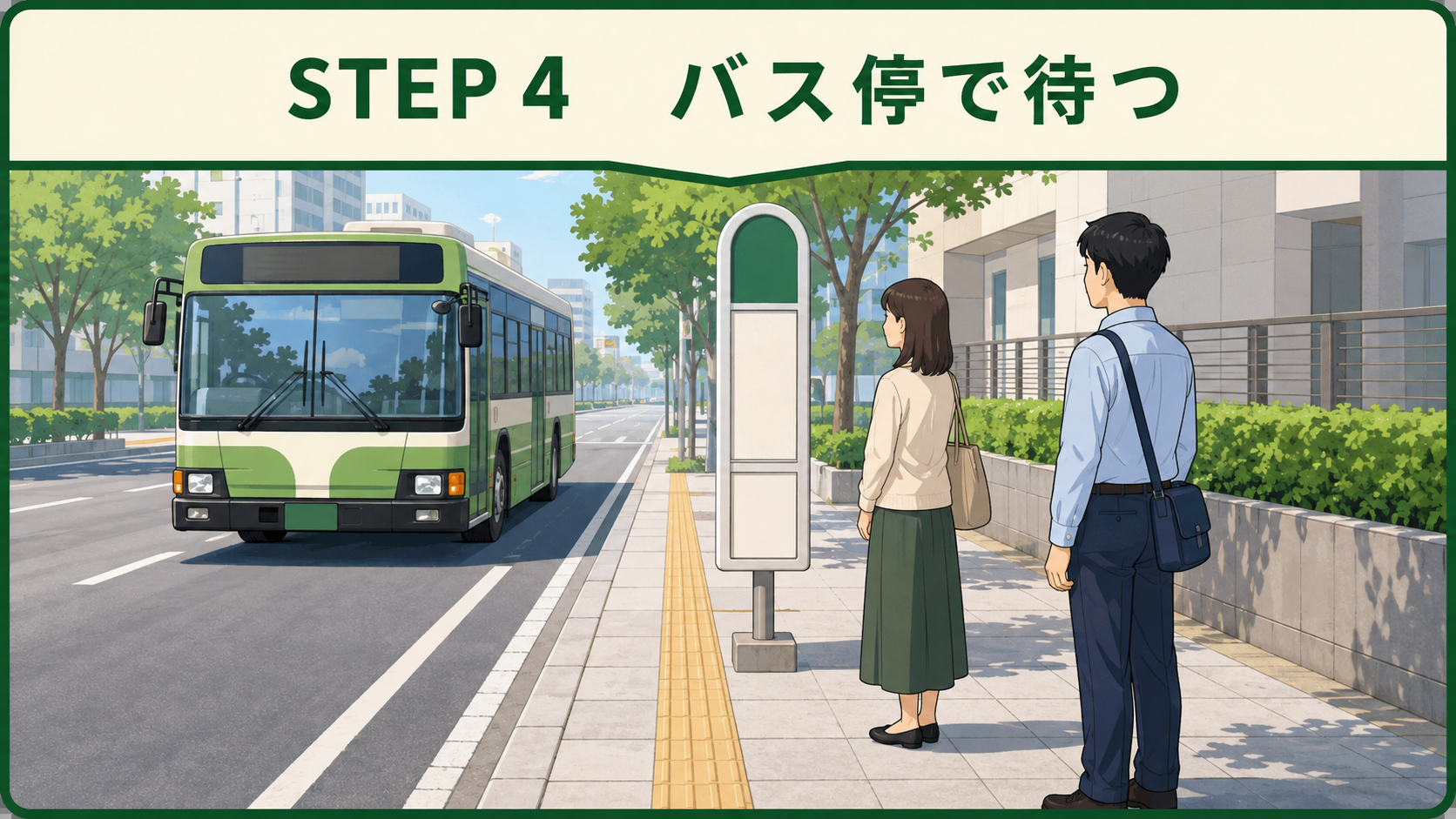
STEP 4|バス停で待つLANGKAH 4|Tunggu di halteSTEP 4|Wait at the stopBƯỚC 4|Chờ tại trạm
Basutei de matsu
安全に待つ
- バス停の近くで、来たバスから見えるように待ちます。
- バス前面の系統番号と行き先をもう一度見ます。
- 列があるときは、最後に並びます。
Tunggu dengan aman
- Tunggu dekat tiang halte agar terlihat oleh pengemudi.
- Periksa lagi nomor rute dan tujuan di bagian depan bus.
- Jika ada antrean, berdirilah di belakang.
Wait safely
- Stay near the stop where the approaching driver can see you.
- Check the route number and destination on the front of the bus again.
- Join the end of the queue.
Chờ an toàn
- Đứng gần cột trạm để tài xế nhìn thấy bạn.
- Kiểm tra lại số tuyến và điểm đến ở phía trước xe.
- Nếu có hàng, hãy đứng cuối hàng.
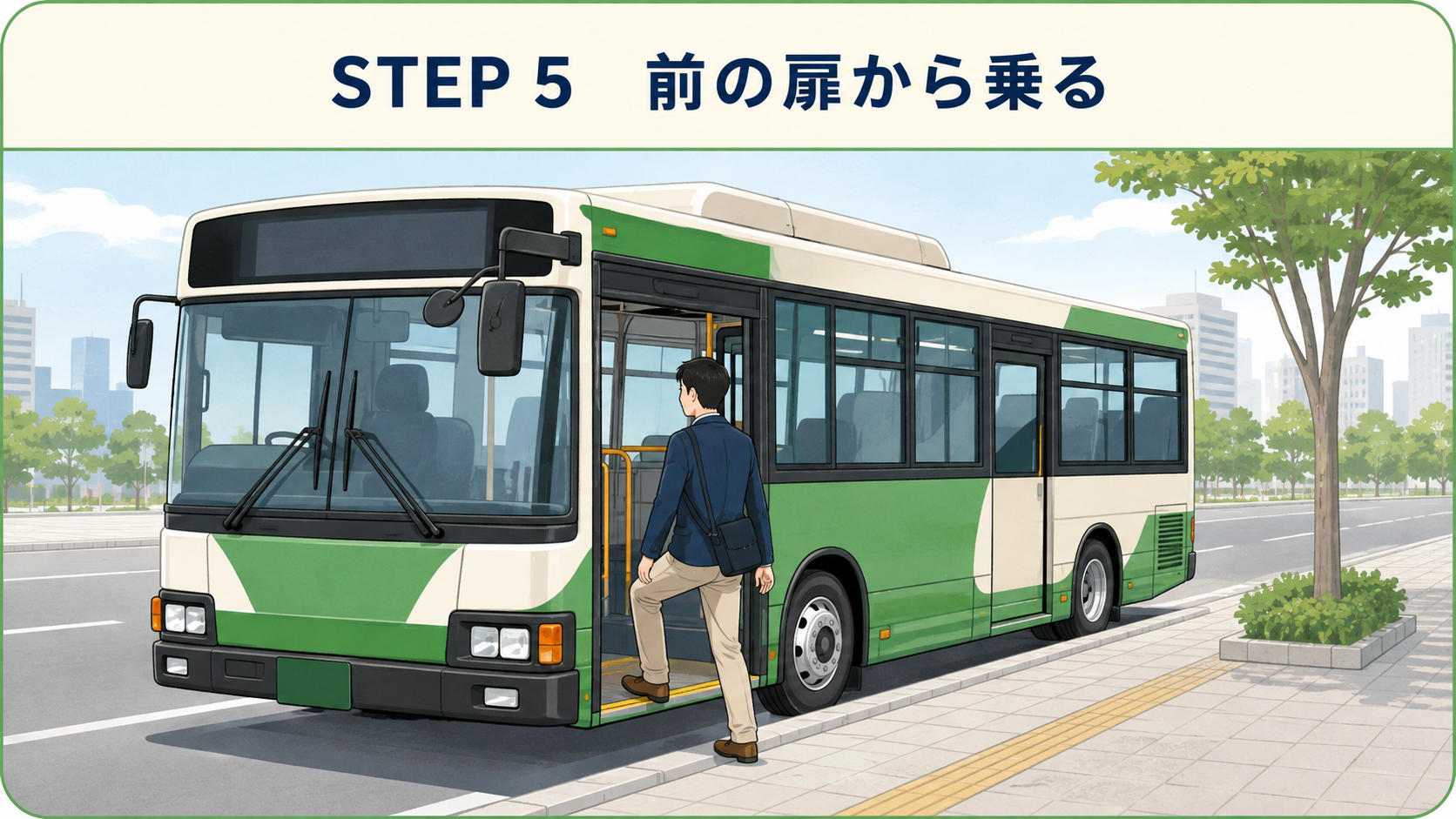
STEP 5|前の扉から乗るLANGKAH 5|Naik dari pintu depanSTEP 5|Board at the frontBƯỚC 5|Lên bằng cửa trước
Mae no tobira kara noru
東京23区内の都営バス
- バスが完全に止まり、扉が開いてから進みます。
- 前の扉から、一人ずつ乗ります。
「前乗り・前払い」の表示がないバスでは、扉の表示を確認してください。
Bus Toei di 23 distrik Tokyo
- Tunggu sampai bus berhenti dan pintu terbuka.
- Naik satu per satu dari pintu depan.
Jika tidak ada keterangan naik dan bayar di depan, periksa tanda pada pintu.
Toei buses in the 23 wards
- Wait until the bus has stopped and the door is open.
- Board one at a time through the front door.
On another bus, check the door signs if it does not say front boarding and prepayment.
Xe buýt Toei trong 23 quận
- Chờ xe dừng hẳn và cửa mở.
- Lần lượt lên bằng cửa trước.
Nếu không có biển lên và trả tiền ở cửa trước, hãy xem ký hiệu trên cửa.
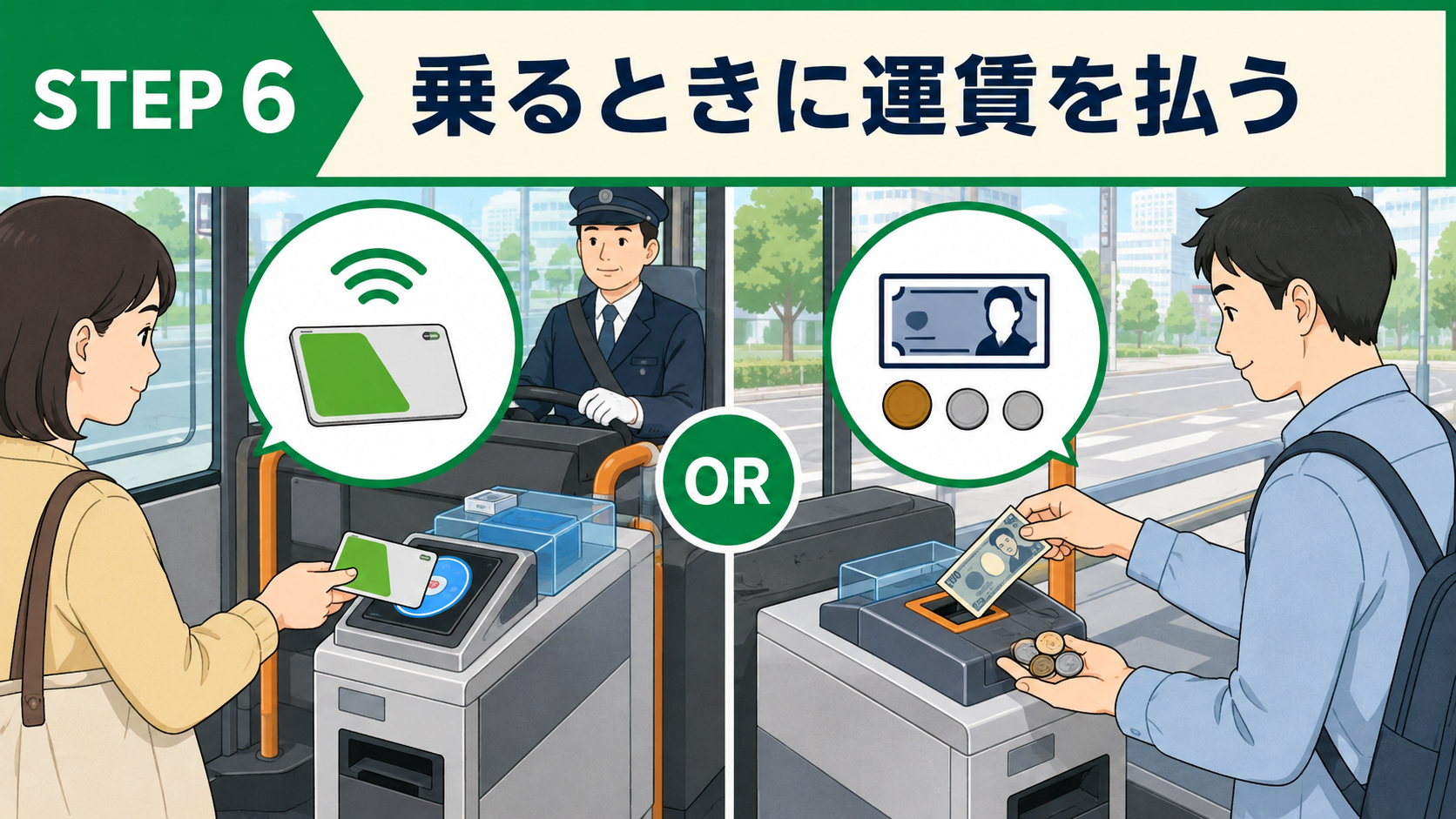
STEP 6|乗るときに運賃を払うLANGKAH 6|Bayar saat naikSTEP 6|Pay when boardingBƯỚC 6|Trả tiền khi lên
Noru toki ni unchin o harau
支払い方法
- 交通系ICカード:青い読み取り部へ1回タッチします。
- 現金:硬貨または1,000円札を料金箱に入れます。
- 残高が足りないときは、乗務員に言ってから1,000円単位でチャージできます。
| 一般系統 | 大人 | 小児 |
|---|---|---|
| 東京23区 | 210円 | 現金110円/IC105円 |
質問:ICカードは使えますか?
IC kādo wa tsukaemasu ka?
IC kādo wa tsukaemasu ka?
2026年9月1日からC・H01系統でキャッシュレス実証予定です。乗る前に停留所や車内の表示を確認してください。
Cara membayar
- Kartu IC transportasi: tempelkan sekali pada pembaca biru.
- Tunai: masukkan koin atau uang 1.000 yen ke kotak tarif.
- Jika saldo kurang, beri tahu pengemudi; isi ulang di bus tersedia per 1.000 yen.
| Rute umum | Dewasa | Anak |
|---|---|---|
| 23 distrik | ¥210 | Tunai ¥110/IC ¥105 |
Tanya: Apakah kartu IC bisa dipakai?
IC kādo wa tsukaemasu ka?
IC kādo wa tsukaemasu ka?
Uji coba bus tanpa uang tunai pada rute C・H01 dijadwalkan mulai 1 September 2026. Periksa tanda di halte dan bus.
How to pay
- Transit IC card: tap once on the blue reader.
- Cash: insert coins or a 1,000-yen note into the fare box.
- If your balance is low, tell the driver; you can add value in 1,000-yen units.
| Regular route | Adult | Child |
|---|---|---|
| 23 wards | ¥210 | Cash ¥110/IC ¥105 |
Ask: Can I use an IC card?
IC kādo wa tsukaemasu ka?
IC kādo wa tsukaemasu ka?
A cashless trial on routes C・H01 is scheduled from September 1, 2026. Check the signs at the stop and on the bus.
Cách trả tiền
- Thẻ IC giao thông: chạm một lần vào đầu đọc màu xanh.
- Tiền mặt: bỏ tiền xu hoặc tờ 1.000 yên vào hộp tiền.
- Nếu thiếu số dư, báo tài xế; có thể nạp theo từng 1.000 yên trên xe.
| Tuyến thường | Người lớn | Trẻ em |
|---|---|---|
| 23 quận | ¥210 | Tiền mặt ¥110/IC ¥105 |
Hỏi: Có dùng thẻ IC được không?
IC kādo wa tsukaemasu ka?
IC kādo wa tsukaemasu ka?
Dự kiến thử nghiệm không dùng tiền mặt trên tuyến C・H01 từ ngày 1/9/2026. Hãy xem biển tại trạm và trên xe.
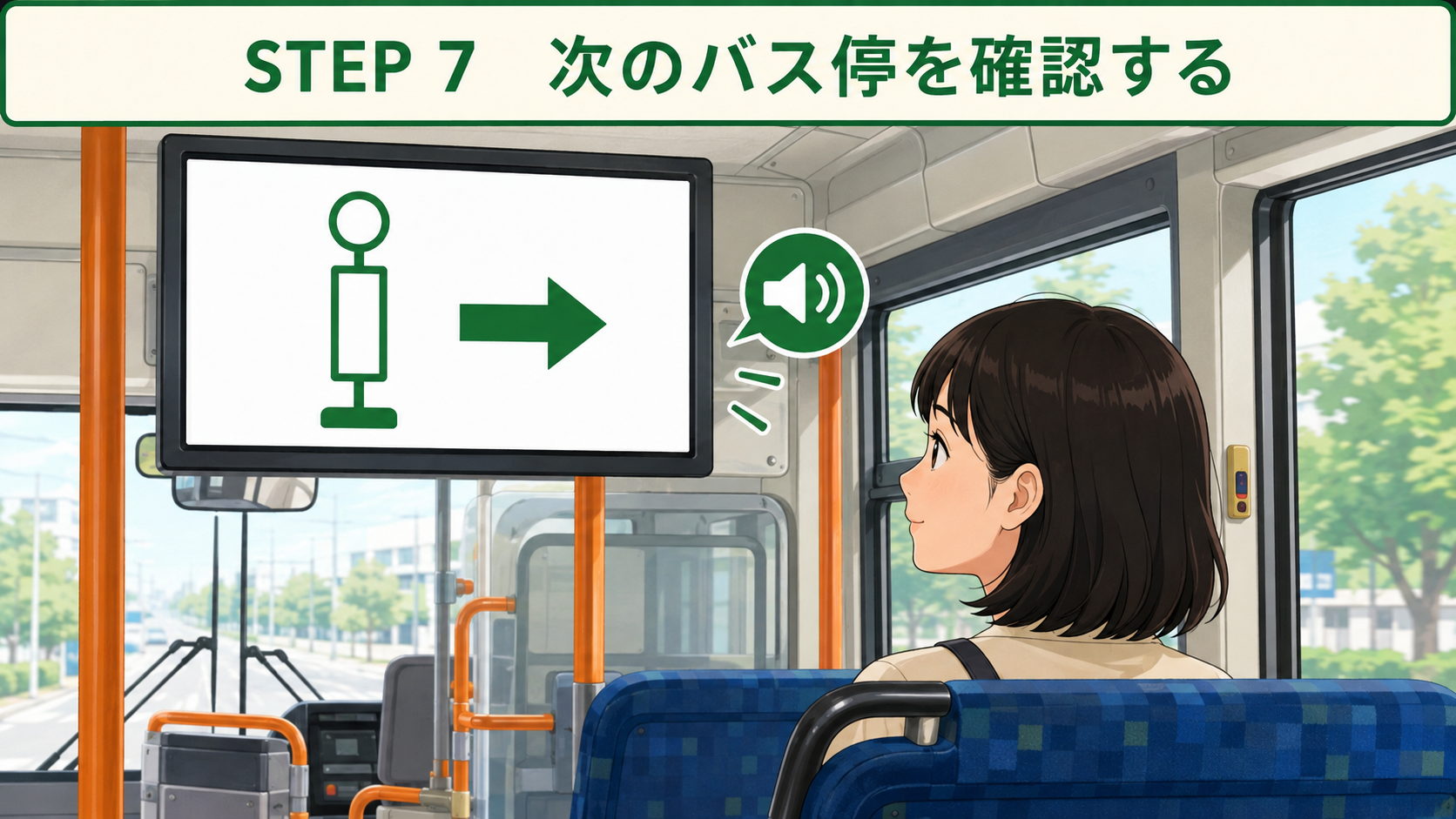
STEP 7|次のバス停を確認するLANGKAH 7|Cek halte berikutnyaSTEP 7|Check the next stopBƯỚC 7|Kiểm tra trạm tiếp theo
Tsugi no basutei o kakunin suru
車内で見るもの
- 座れるときは座ります。立つときは手すりやつり革を持ちます。
- 前方モニターと車内放送で、次のバス停を確認します。
- 地図アプリも一緒に見ると安心です。
Yang dilihat di dalam bus
- Duduk jika ada kursi. Jika berdiri, pegang pegangan.
- Lihat monitor depan dan dengarkan pengumuman halte berikutnya.
- Anda juga bisa memeriksa aplikasi peta.
What to check on board
- Sit if a seat is available. Hold a rail or strap if standing.
- Watch the front monitor and listen for the next-stop announcement.
- Checking your map app can help too.
Điều cần xem trên xe
- Ngồi nếu có chỗ. Nếu đứng, hãy bám tay vịn.
- Xem màn hình phía trước và nghe thông báo trạm tiếp theo.
- Có thể kiểm tra thêm trên ứng dụng bản đồ.
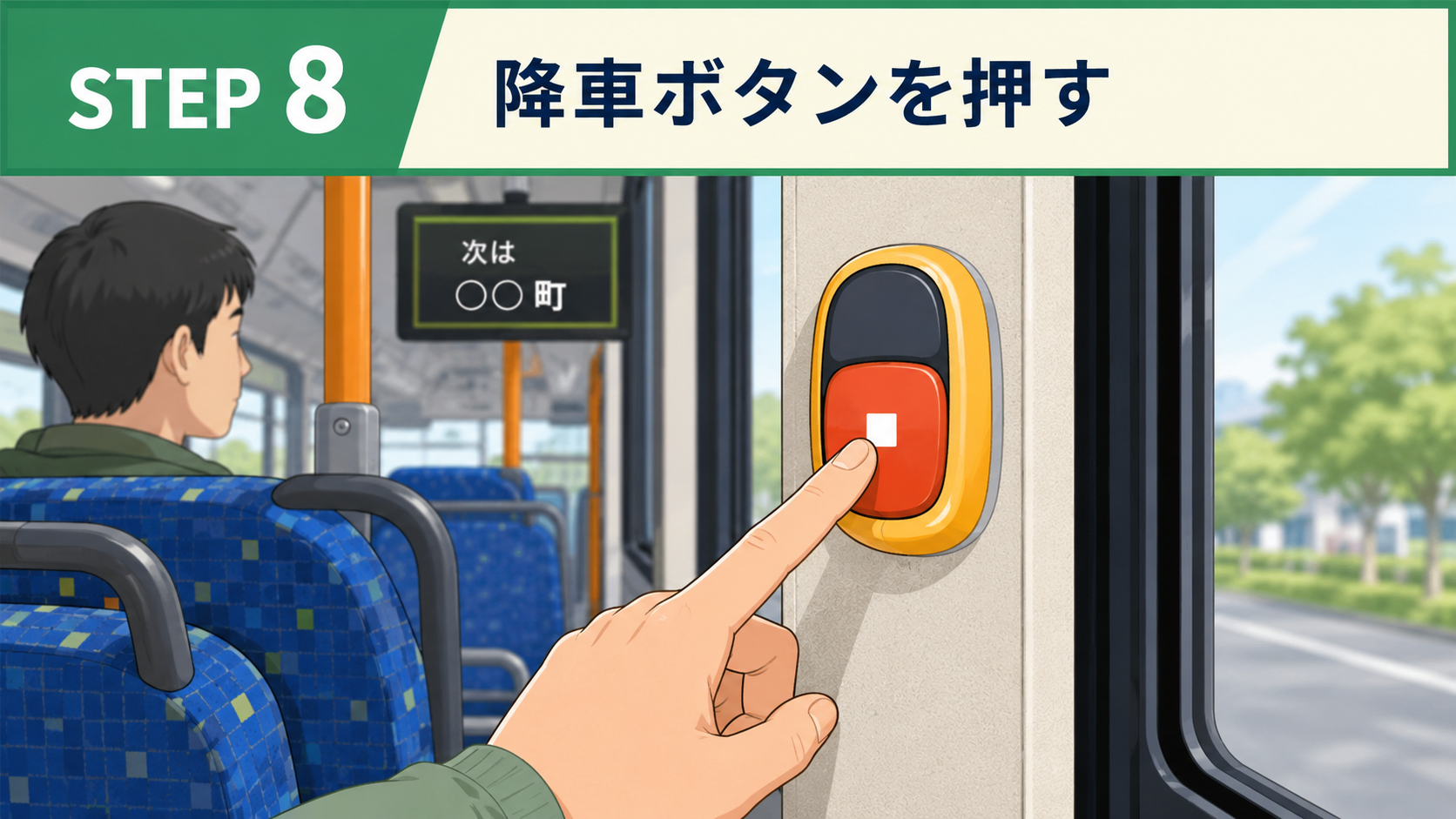
STEP 8|降車ボタンを押すLANGKAH 8|Tekan tombol turunSTEP 8|Press the stop buttonBƯỚC 8|Bấm nút xuống xe
Kōsha botan o osu
降りる一つ前
- 「次は〇〇です」と聞こえたら、近くの降車ボタンを1回押します。
- ボタンが光れば、運転手に伝わっています。
- バスが動いている間は、席を立たずに待ちます。
質問:次のバス停で降ります。
Tsugi no basutei de orimasu.
Tsugi no basutei de orimasu.
Satu halte sebelum turun
- Saat mendengar bahwa halte Anda berikutnya, tekan tombol turun sekali.
- Jika tombol menyala, pengemudi sudah tahu.
- Tetap duduk sampai bus berhenti.
Katakan: Saya turun di halte berikutnya.
Tsugi no basutei de orimasu.
Tsugi no basutei de orimasu.
One stop before
- When your stop is announced as next, press a stop button once.
- If it lights up, the driver has received the request.
- Stay seated until the bus stops.
Say: I will get off at the next stop.
Tsugi no basutei de orimasu.
Tsugi no basutei de orimasu.
Trước trạm cần xuống
- Khi nghe thông báo trạm của bạn là trạm tiếp theo, bấm nút một lần.
- Nút sáng nghĩa là tài xế đã nhận yêu cầu.
- Ngồi yên cho đến khi xe dừng.
Nói: Tôi sẽ xuống ở trạm tiếp theo.
Tsugi no basutei de orimasu.
Tsugi no basutei de orimasu.
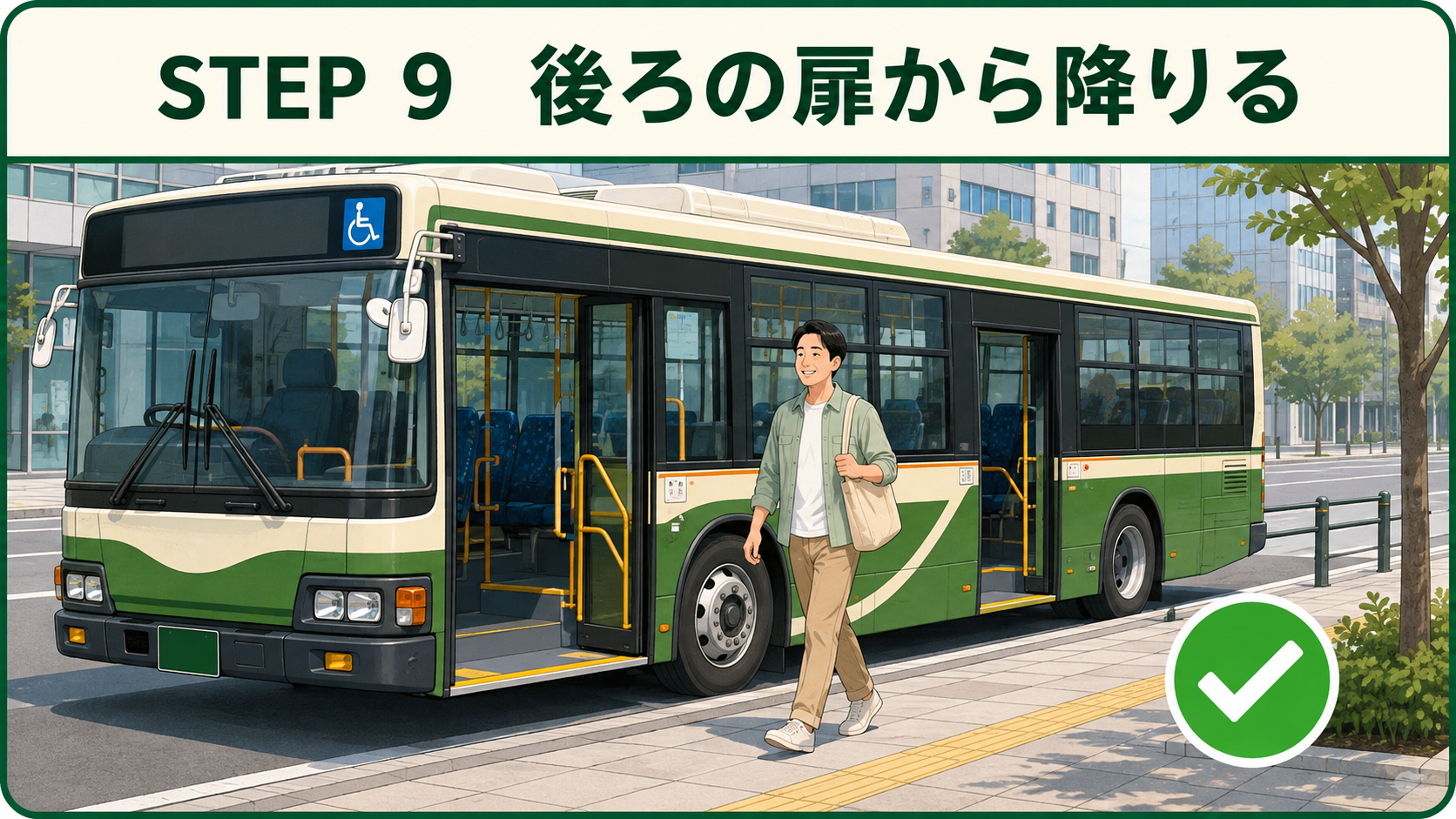
STEP 9|後ろの扉から降りるLANGKAH 9|Turun dari pintu belakangSTEP 9|Exit at the rearBƯỚC 9|Xuống bằng cửa sau
Ushiro no tobira kara oriru
最後の行動
- バスが完全に止まり、後ろの扉が開いてから立ちます。
- 忘れ物に気をつけて、一人ずつ降ります。
- 東京23区内の都営バスは、降りるときの支払いはありません。
✓ 目的のバス停で安全に降りられた
Tindakan terakhir
- Berdiri setelah bus berhenti dan pintu belakang terbuka.
- Periksa barang bawaan lalu turun satu per satu.
- Pada bus Toei 23 distrik, Anda tidak membayar lagi saat turun.
✓ Saya turun dengan aman di halte tujuan
Final action
- Stand after the bus has stopped and the rear door opens.
- Check your belongings and exit one at a time.
- On Toei buses in the 23 wards, you do not pay again when exiting.
✓ I got off safely at my destination
Hành động cuối
- Đứng lên sau khi xe dừng và cửa sau mở.
- Kiểm tra hành lý rồi lần lượt xuống.
- Trên xe Toei trong 23 quận, không cần trả tiền lần nữa khi xuống.
✓ Tôi đã xuống an toàn tại trạm cần đến
できました!一人でバスに乗れます
最初は、系統番号・行き先・降りるバス停をスマートフォンに保存しておくと安心です。分からないときは、短い日本語で乗務員に聞けば大丈夫です。
Berhasil! Sekarang Anda bisa naik bus sendiri
Simpan nomor rute, tujuan, dan halte turun di ponsel. Jika ragu, tunjukkan layar dan tanyakan kepada pengemudi.
You did it! You can ride the bus by yourself
Save the route number, destination and stop on your phone. If unsure, show the screen and ask the driver.
Đã làm được! Bạn có thể tự đi xe buýt
Hãy lưu số tuyến, điểm đến và trạm xuống trong điện thoại. Nếu chưa chắc, hãy đưa màn hình cho tài xế và hỏi.